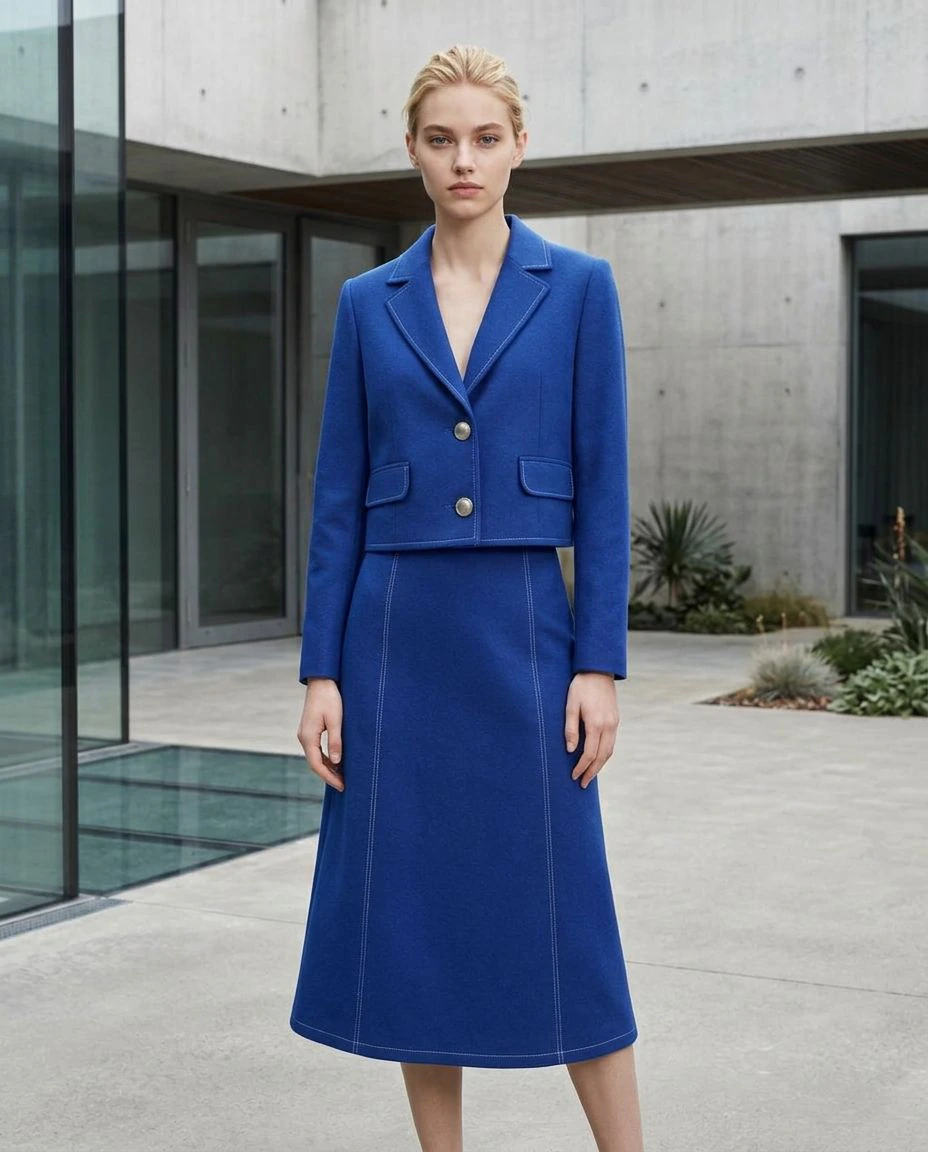
Production case study / Australia
AI fashion campaign production in Australia.
A transparent controlled test of identity consistency, simple garment fidelity, selective rerolls, and the limits that still require human review.
Controlled demonstration - not customer work
This test used a synthetic, rights-cleared, unbranded garment reference and an existing approved identity anchor. It does not report customer results, sales performance, or a biometric identity guarantee.
12
total candidates
Including the source garment image
9
campaign candidates
Generated with Nano Banana 2
3
first passes rejected
Rerolled against explicit QA failures
US$0.691
estimated direct cost
Across source, comparisons, and final candidates
The production question
Could one simple garment remain readable across a connected campaign?
The target was deliberately narrow: one solid-colour tailored outfit with visible construction details, one established identity, and six different campaign frames. The workflow had to preserve the cobalt colour, cropped blazer, two silver buttons, paired flap pockets, contrast-stitched lapels, and A-line midi silhouette where the camera framing allowed.
The objective was not to prove unrestricted product replacement. It was to find a credible boundary for a small paid pilot and expose where identity, styling, pose, or garment details still drift.
Workflow
Generation was one step, not the production system.
- 01
Define the authoritative reference
The synthetic source image, not its original text prompt, became the product specification: saturated cobalt, cropped blazer, two silver buttons, paired flap pockets, contrast stitching, and an A-line midi skirt.
- 02
Lock the identity and campaign direction
One approved ISLA-A11 identity anchor and the garment reference were used throughout. An accepted campaign frame was added as a third consistency reference only on selective rerolls.
- 03
Generate in reviewable rounds
Google Nano Banana 2 produced nine campaign candidates at 1K. The process did not treat every completed generation as usable output.
- 04
Reject, reroll, and document
Three first-pass candidates were rejected for skirt-length drift, identity drift, invented accessories, or weakened hair and garment consistency. Six frames passed visual review.
Selected output
Six connected frames, selected from nine.
Each caption records why the selected frame passed or what the preceding candidate required us to correct.
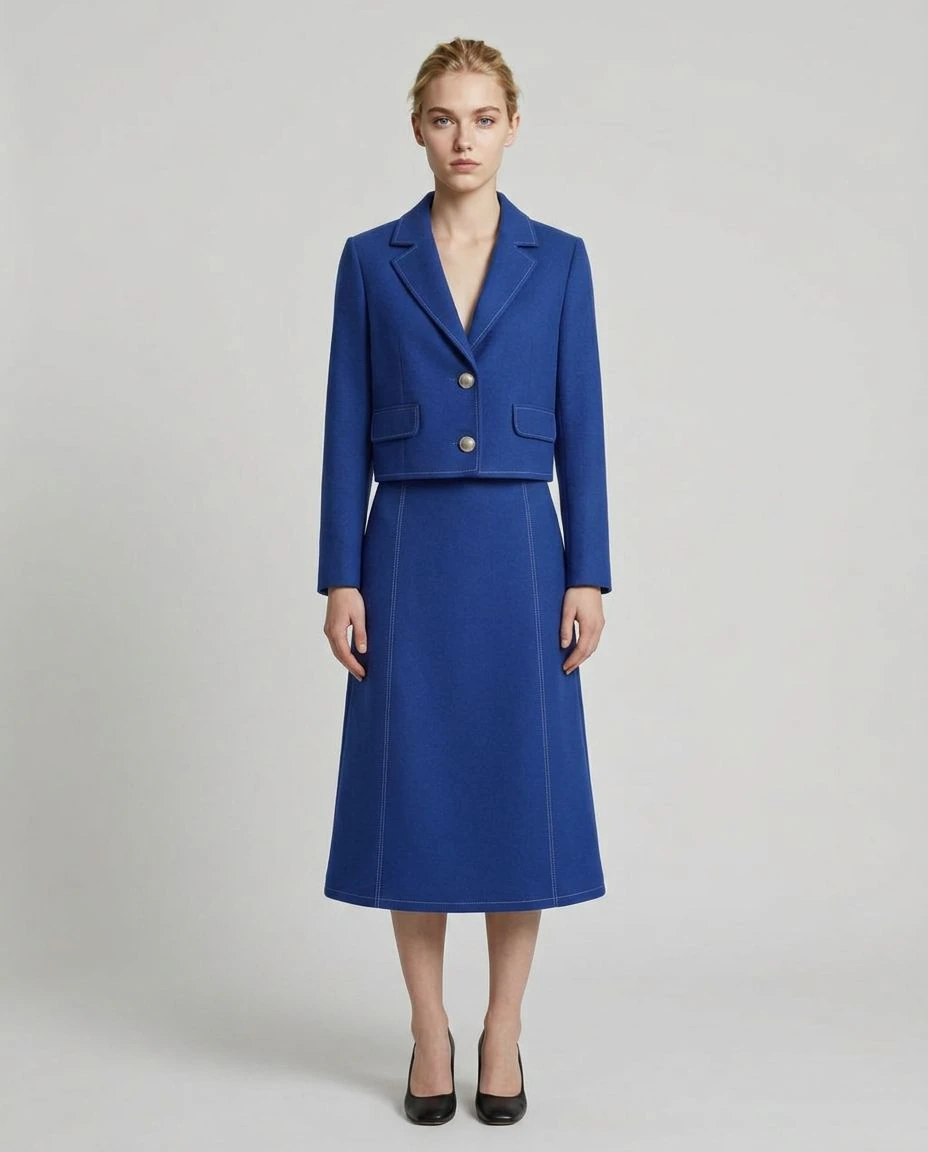
01 / Front product lock
Selected after a reroll to improve identity and preserve the full front construction.
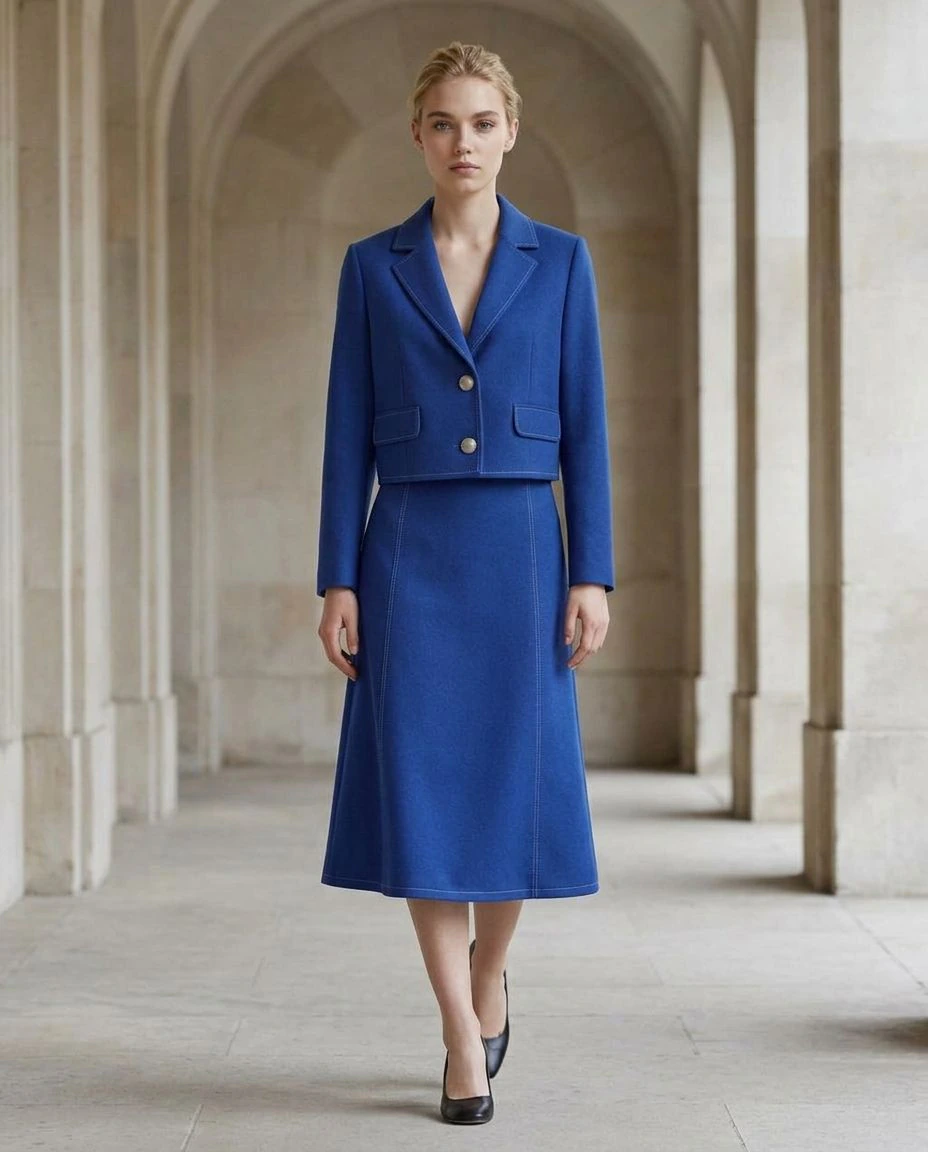
02 / Campaign movement
The first candidate was rejected for identity drift and an incorrect knee-length skirt.
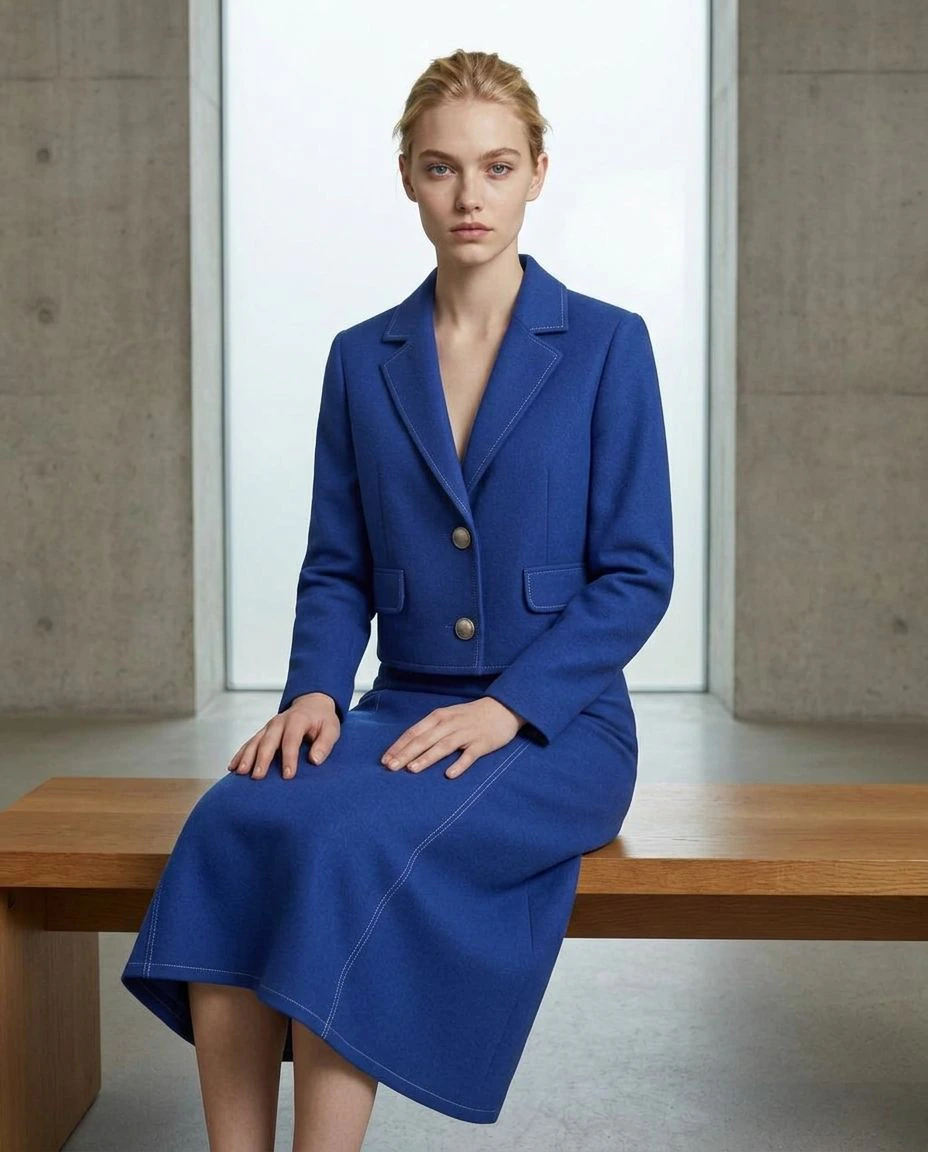
03 / Seated variation
Rerolled after the first candidate invented wrist accessories.
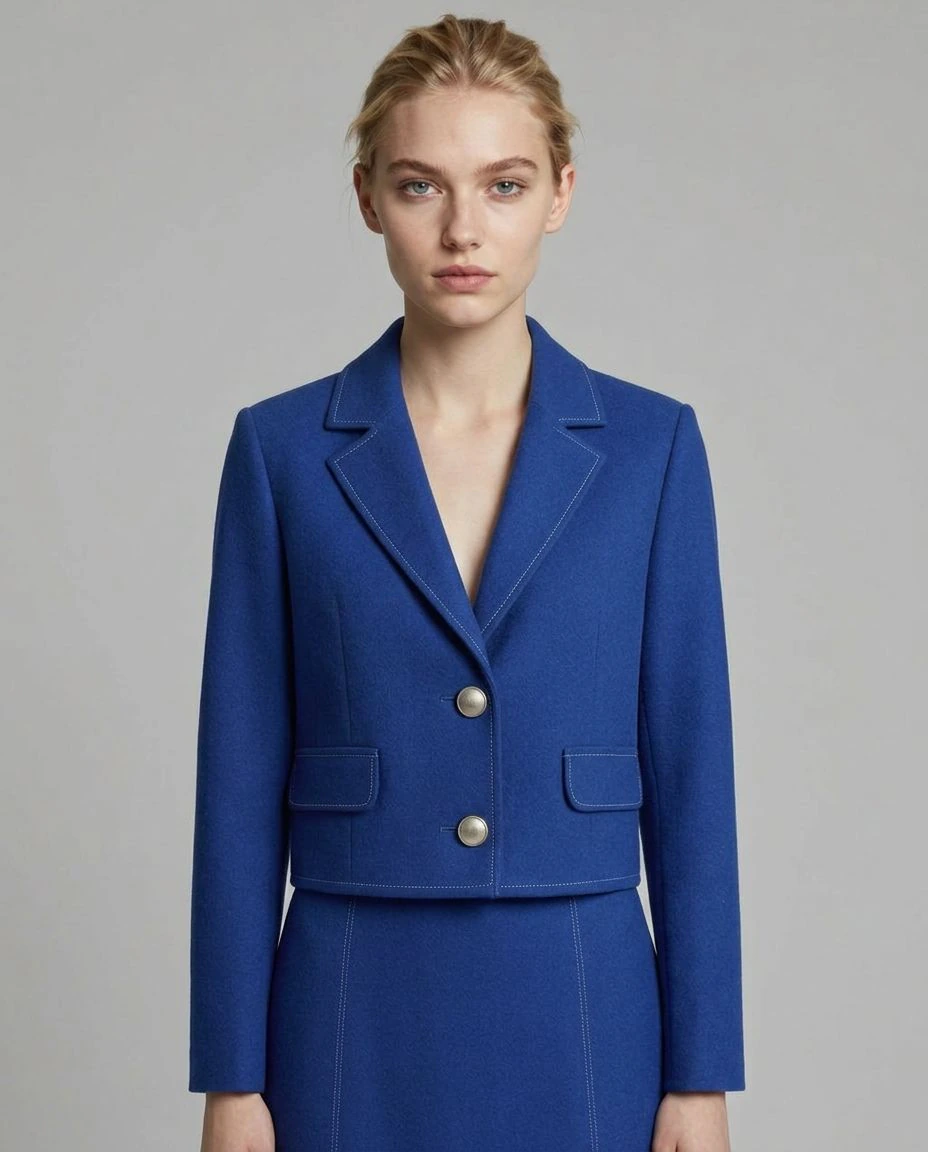
04 / Construction detail
A closer frame retaining the lapel stitching, pockets, buttons, fabric, and identity.
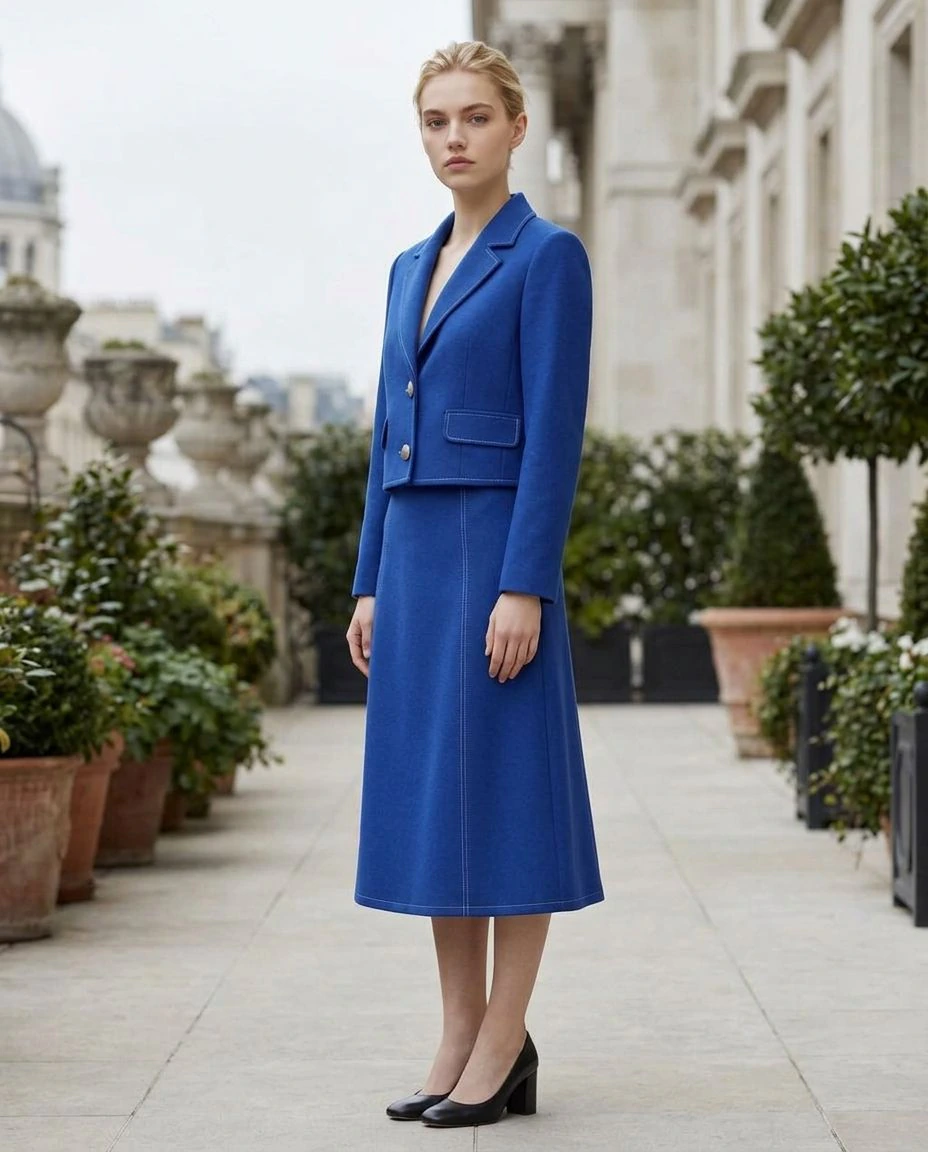
05 / Environmental profile
Rerolled to restore the approved identity, hair direction, and midi length.
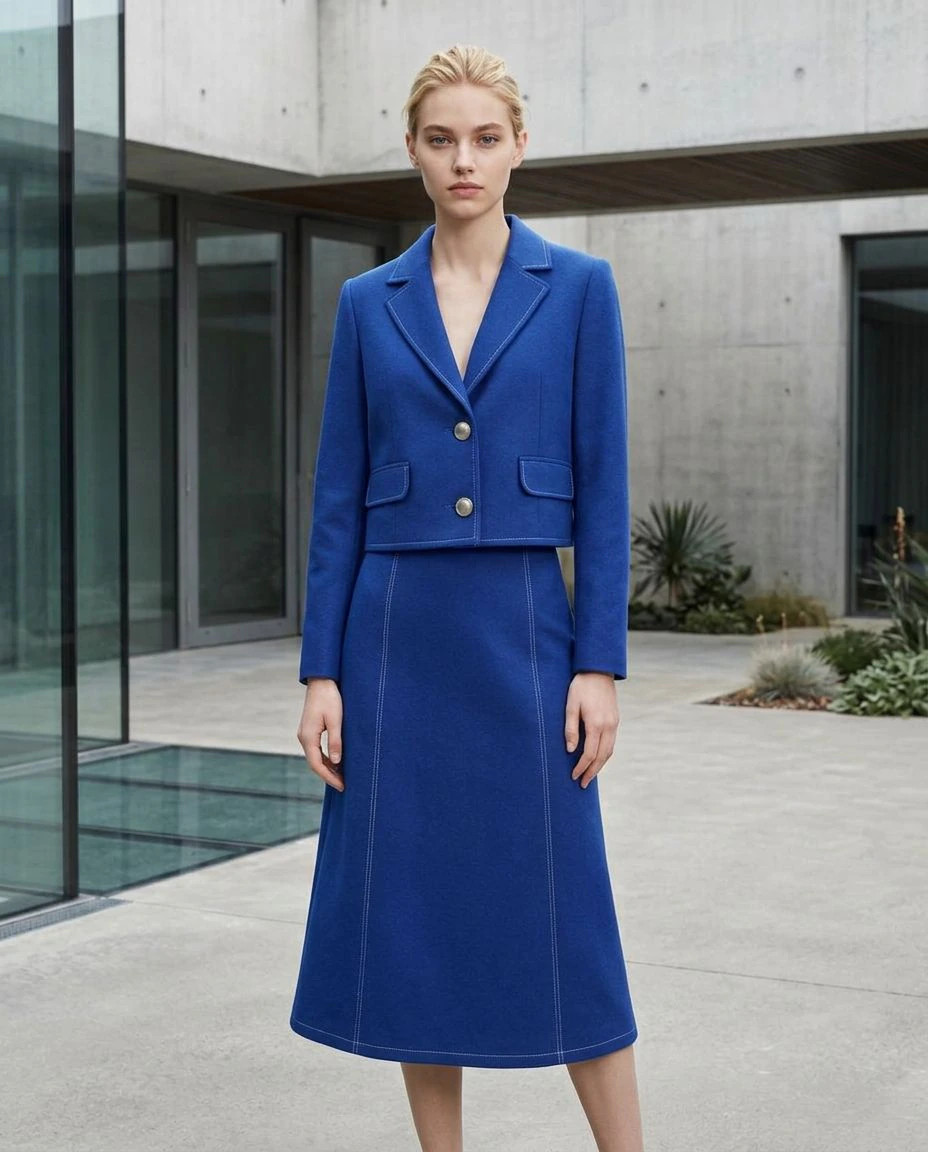
06 / Campaign hero
A wider architectural frame preserving the approved garment construction.
What this test supports
A narrow, feasibility-reviewed pilot.
Simple, unbranded, solid-colour tailoring
Clearly visible buttons, pockets, seams, and silhouette
One established identity across a bounded six-image set
Human selection, selective rerolls, and a documented workflow
What it does not prove
Exact reproduction is not assumed.
Logos, labels, typography, prints, embroidery, or branded hardware
Technical activewear construction or multiple layered products
Hidden garment details across arbitrary poses and camera angles
Unreviewed batch output or a biometric identity guarantee
Controlled production evidence
Explore the identity systems available for ecommerce production.
Marketplace previews and generated outputs are AI-generated. Review product fidelity before publication.